
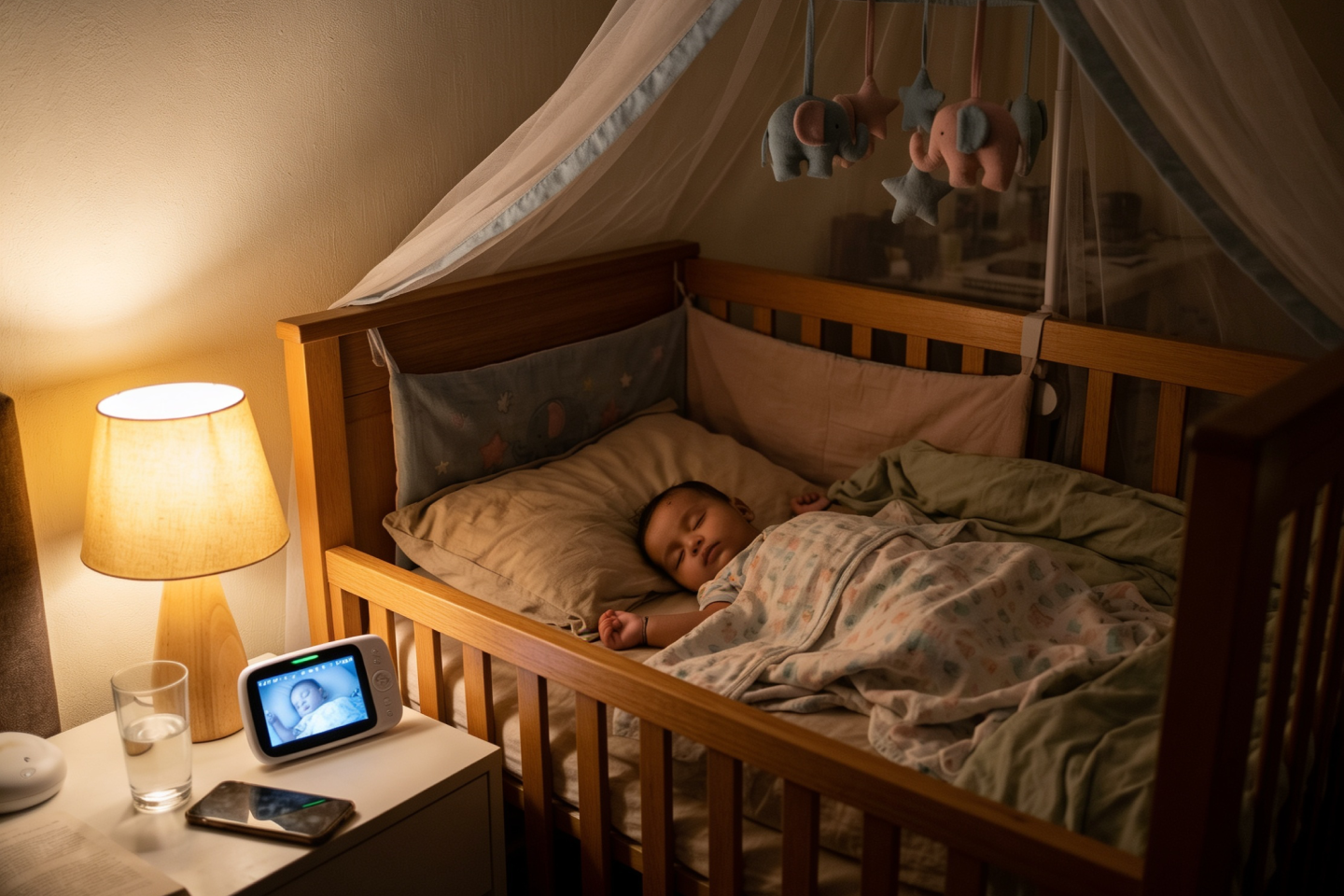
The ABCs of Safe Sleep
Alone: Baby sleeps in their own sleep space, not in bed with adults or siblings.
Back: always placed on their back for every single sleep, until they can roll both ways independently and reliably.
Crib (or equivalent): a firm, flat surface with no soft bedding, pillows, bumpers, cushions, or toys anywhere in the sleep space.
Room-Sharing vs Bed-Sharing
Room-sharing baby’s crib or bassinet in the parents’ room is recommended for at least the first six months and ideally the first year.
Research links it to a measurable reduction in SIDS risk, and it also makes night feeds considerably easier to manage. Bed-sharing carries meaningfully higher risk and is specifically contraindicated if either parent smokes, has consumed alcohol or sedative medication, or is excessively sleep-deprived.
Temperature and Environment
- Keep the room comfortably cool, around 18–20°C.
- A light, well-fitted sleep sack is preferable to loose blankets, which pose a suffocation risk.
- Skip hats indoors; babies regulate body temperature significantly through their heads.
- Pacifier use at sleep onset is associated with reduced SIDS risk; if breastfeeding, most paediatricians suggest introducing it after the first three to four weeks once feeding is established.
When Guidelines Feel Hard to Follow
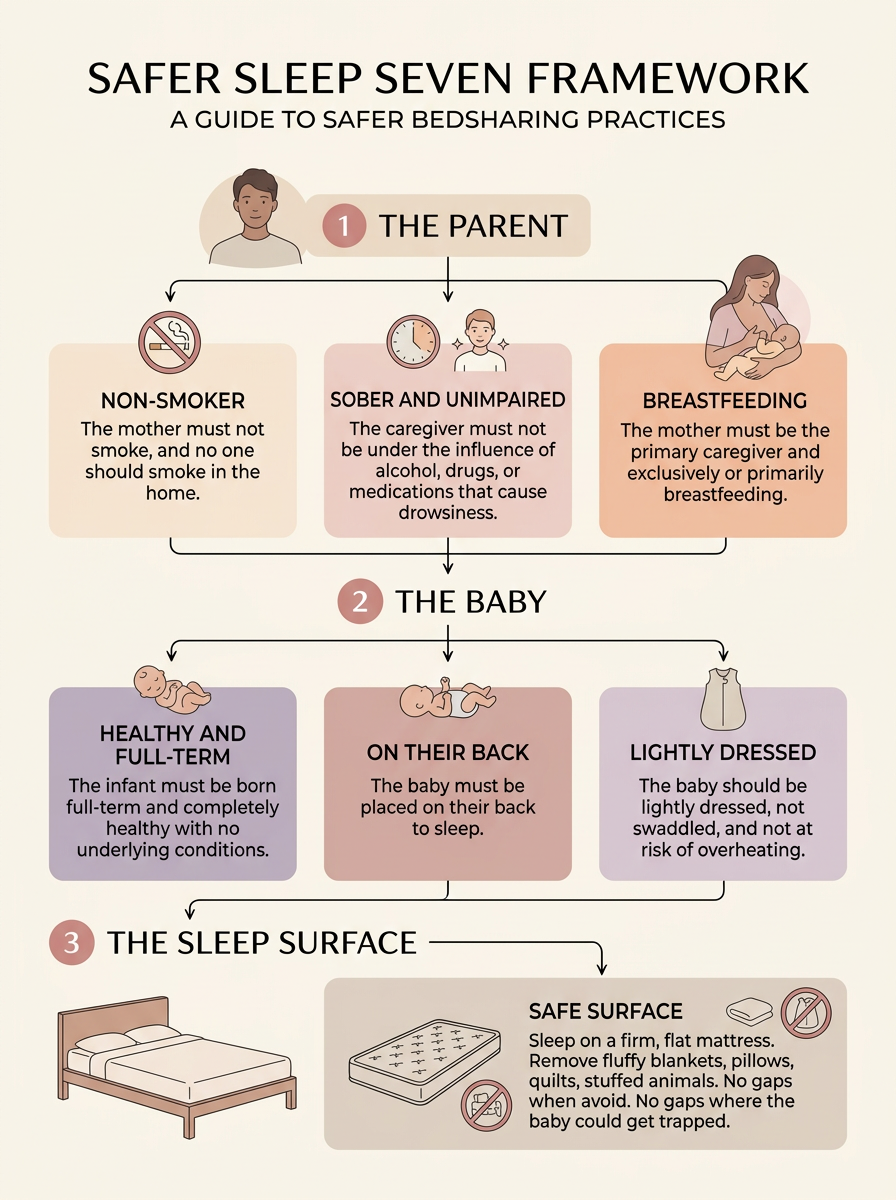
Many exhausted parents find themselves in situations that don’t perfectly match the guidelines. If bed-sharing is happening regardless, the Safer Sleep Seven framework from La Leche League outlines conditions that substantially reduce, though do not eliminate, the risk. Informed decision-making, even imperfect, beats uninformed practice.