
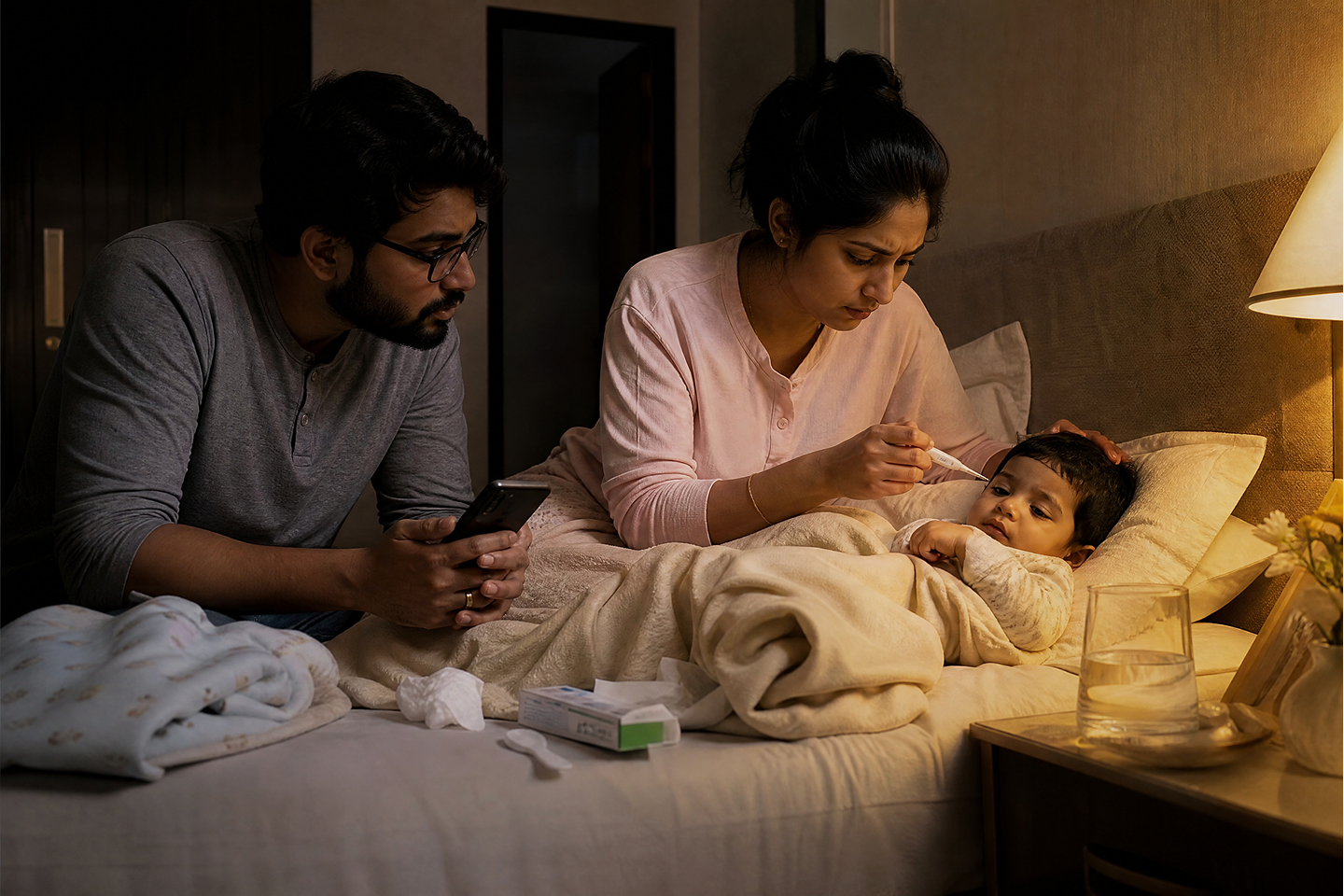
FEVER
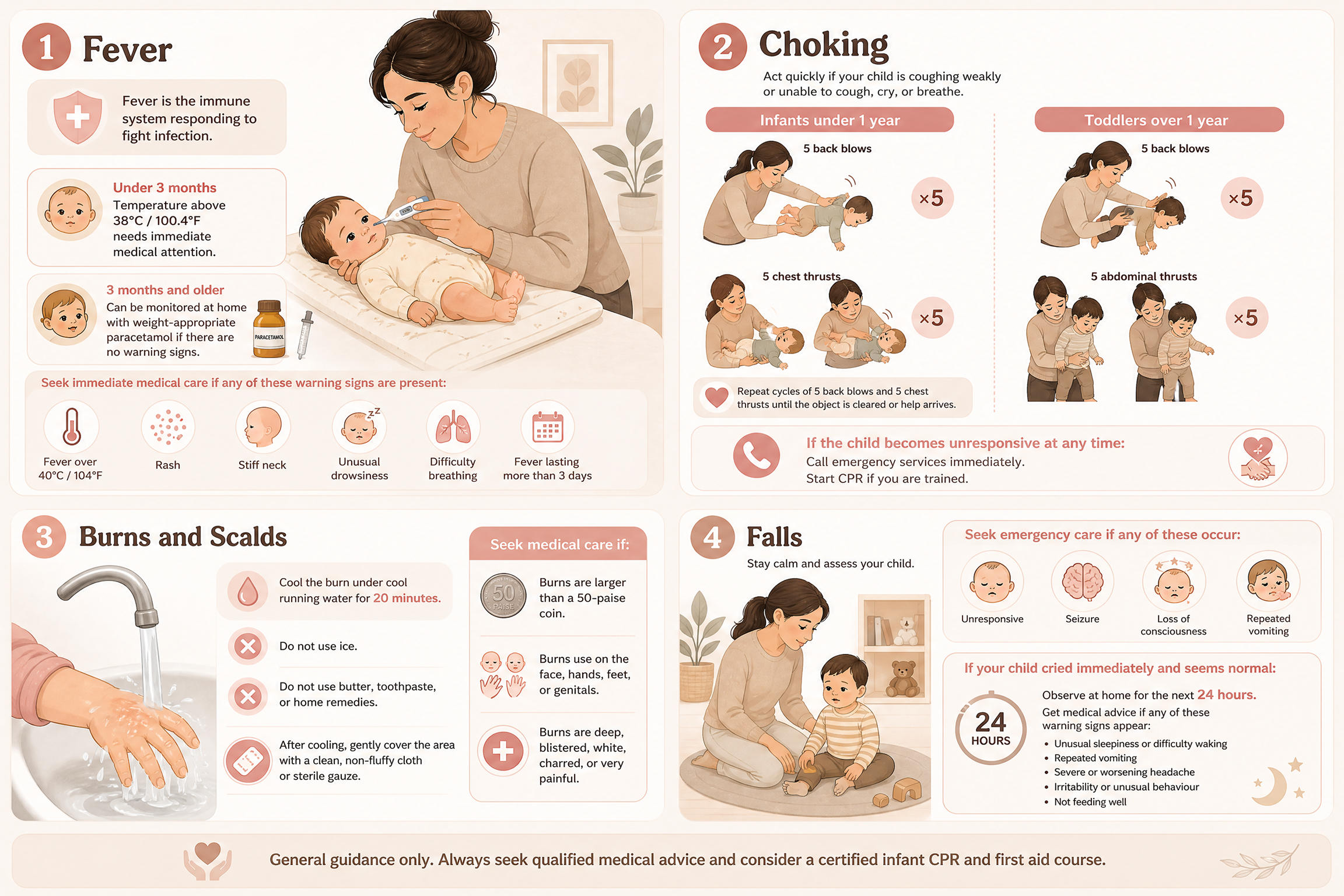
Fever is the immune system doing its job, not an illness in itself.
In babies under three months, any temperature over 100.4°C requires immediate medical attention; there is no ‘wait and watch’ in this age group. In older babies and toddlers, fever without other worrying symptoms can typically be managed at home with a weight-appropriate dose of paracetamol and close monitoring.
Seek help for fever over 104°C, a rash, a stiff neck, unusual drowsiness, difficulty breathing, or fever lasting more than three days.
CHOKING
For infants under one year: five back blows followed by five chest thrusts, alternating until the object clears or the baby loses consciousness.
For toddlers over one year: five back blows followed by five abdominal thrusts (the Heimlich manoeuvre).
If the child loses consciousness at any point, begin infant or child CPR immediately and call emergency services.
BURNS AND SCALDS
Run cool, not cold, water over the affected area for a minimum of twenty minutes. Never apply ice, butter, toothpaste, or any home remedy directly to a burn. Cover with a clean, non-fluffy material once cooled.
Seek medical attention for burns larger than a fifty-paise coin, or any burn on the face, hands, feet, or genitals.
FALLS
A baby who falls from a height and is unresponsive, has a seizure, loses consciousness, or vomits repeatedly needs immediate emergency care.
A baby who cries right away after a fall and otherwise seems normal can usually be observed at home; but watch closely for twenty-four hours and seek care if anything seems off, including unusual sleepiness or repeated vomiting.
This is general guidance only. Always seek qualified medical advice for your specific situation, and consider a certified infant CPR and first aid course.