
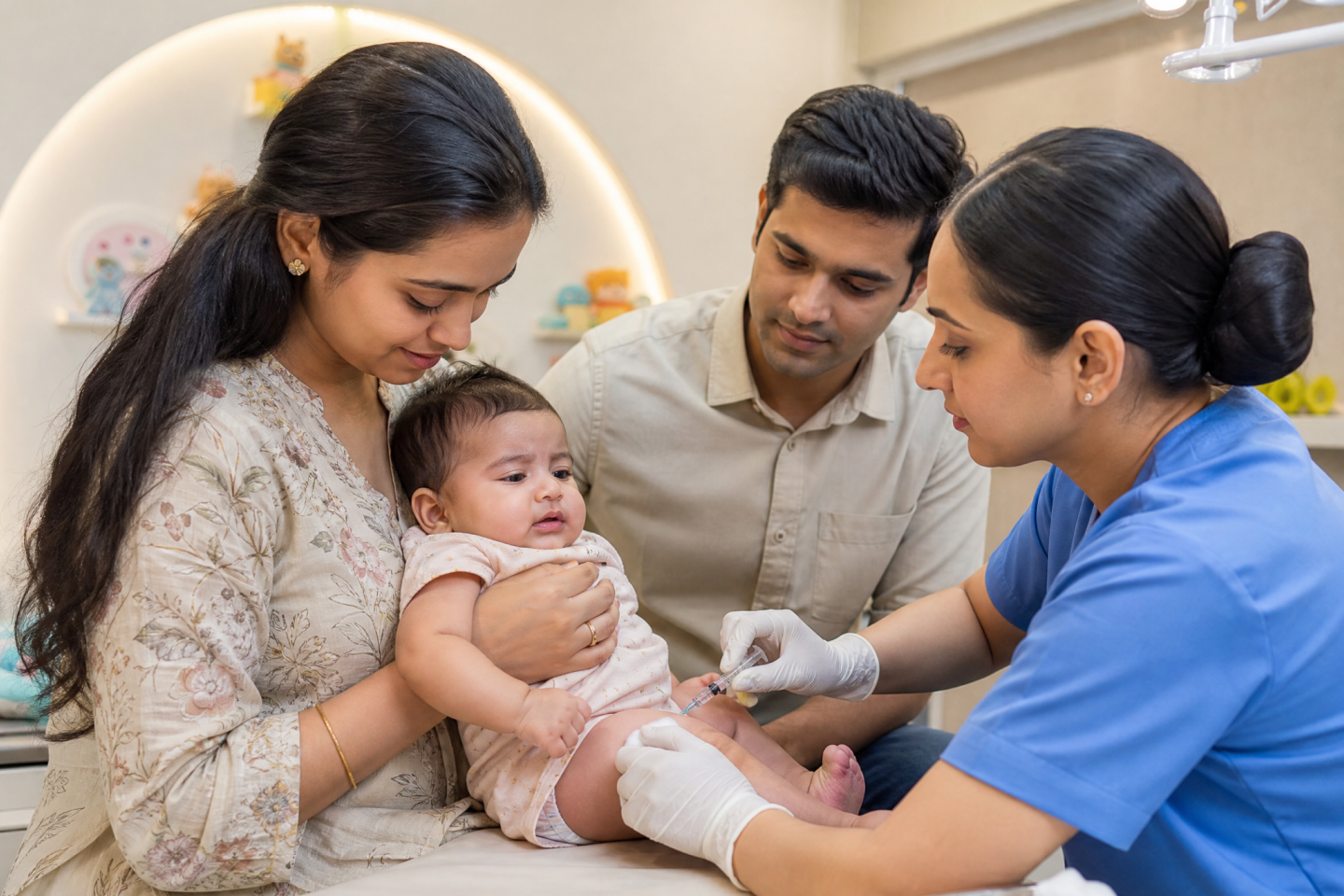
Why Vaccines Matter
Vaccines work by training the immune system to recognise and respond to specific pathogens before a real infection occurs, building protection without the risk of the disease itself. The conditions covered under India’s National Immunisation Programme; polio, measles, hepatitis B, diphtheria, whooping cough, tetanus, and others; were once leading causes of childhood death and lifelong disability across the country.
The National Immunisation Schedule (Key Milestones)
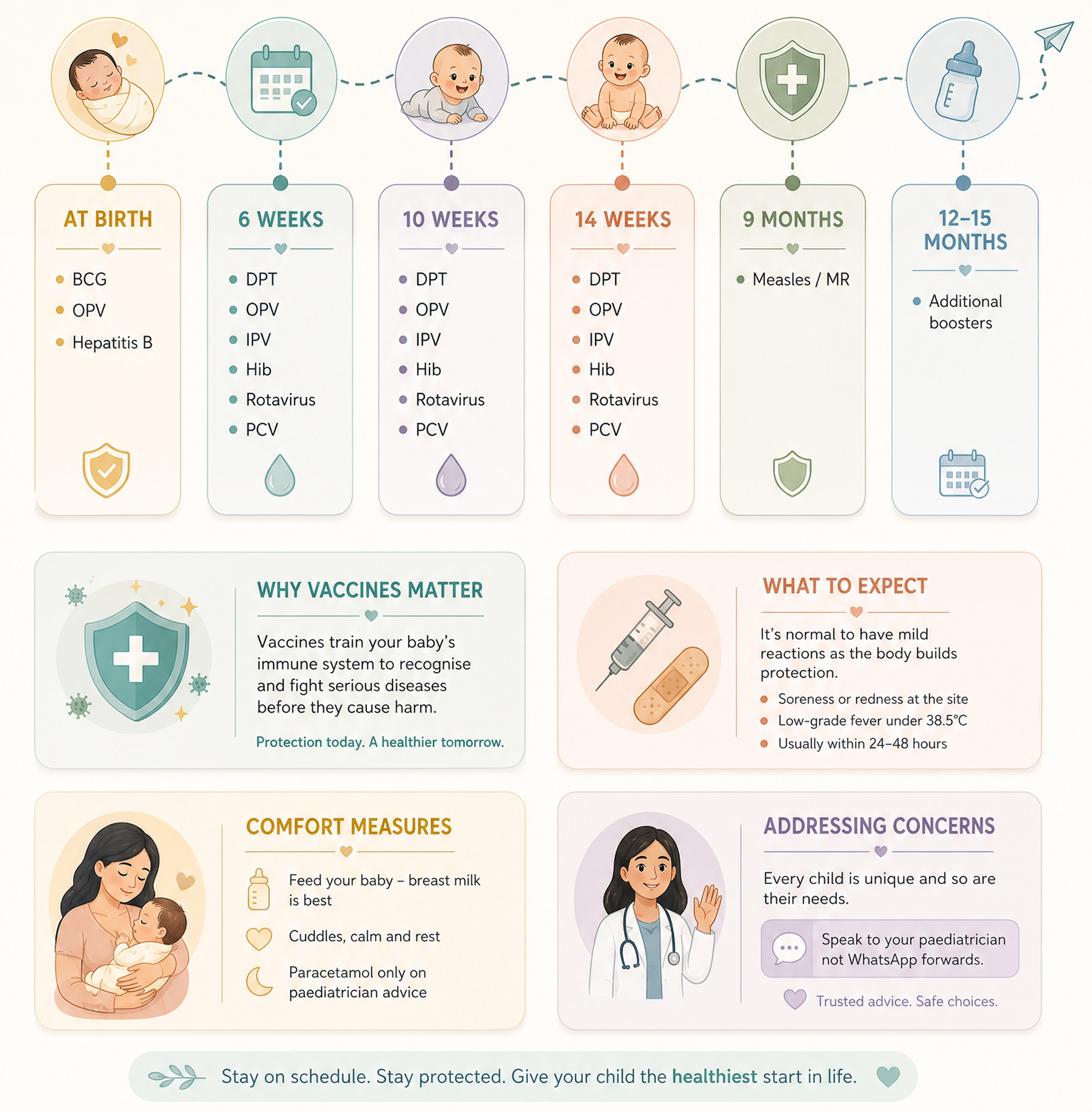
At birth: BCG, OPV (oral polio), and Hepatitis B.
At 6, 10, and 14 weeks: DPT (diphtheria-pertussis-tetanus), OPV, IPV, Hib, Rotavirus, and PCV doses.
At 9 months: Measles/MR.
Between 12 and 15 months: additional boosters.
The Indian Academy of Pediatrics (IAP) also publishes an extended schedule with further recommended vaccines beyond the government program; discuss this with your pediatrician to decide what’s right for your child.
What to Expect
- Soreness and redness at the injection site is normal and expected, usually settling within a day or two.
- Low-grade fever, under 38.5°C, is common in the 24–48 hours after vaccination.
- Comfort measures include feeding, extra cuddles, and an age-appropriate dose of paracetamol on your paediatrician’s advice.
- Serious adverse reactions are extremely rare relative to the scale of benefit.
Addressing Concerns
The evidence on vaccine safety is extensive, global, and consistent across decades of independent research. The original 1998 study claiming a link between the MMR vaccine and autism has been fully retracted, and its author was struck off the medical register for data manipulation. If you have concerns about any vaccine, discuss them with your pediatrician, don't rely on a forwarded WhatsApp message.