
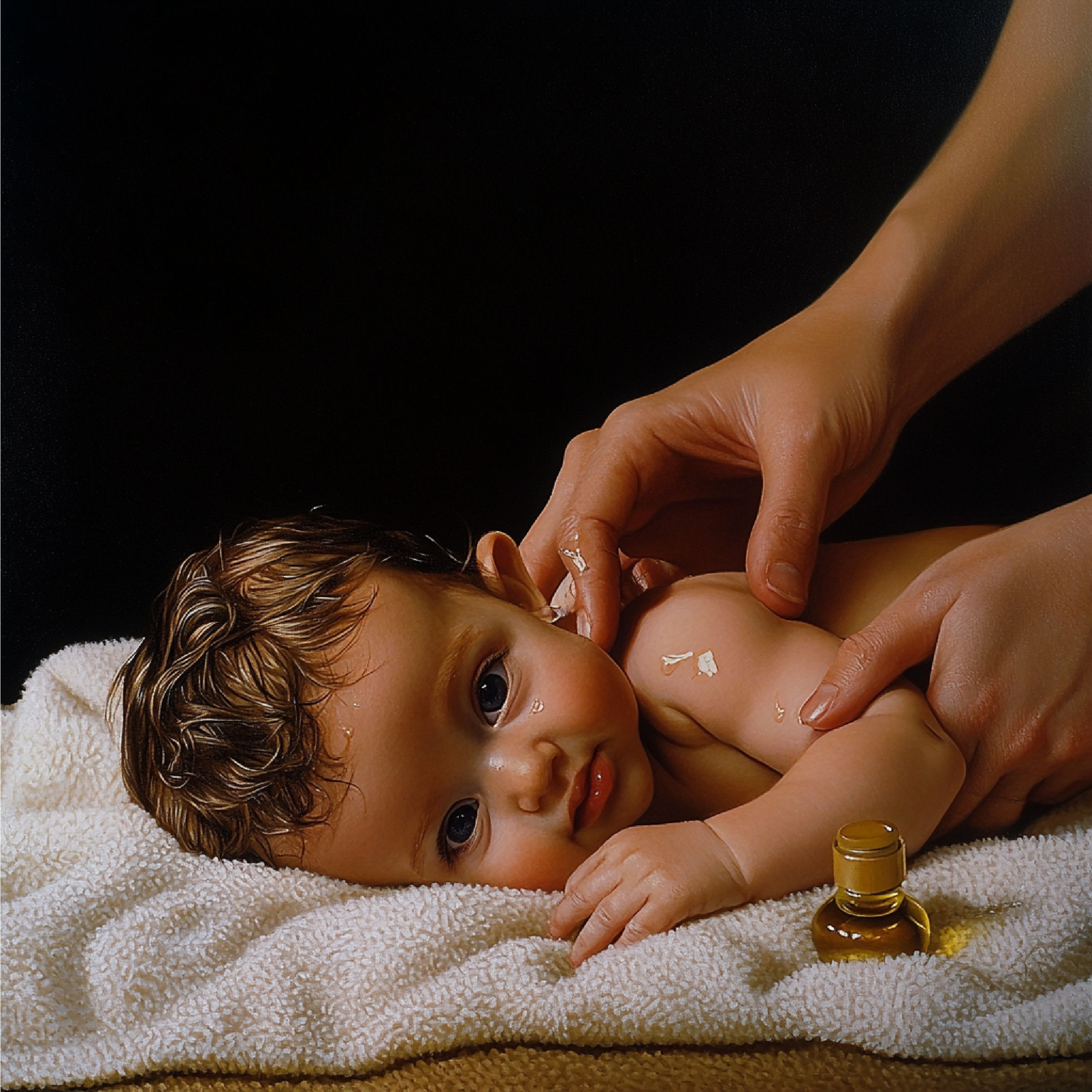
The Ritual That Actually Works
A Cochrane Review looked at 34 randomised controlled trials on infant massage. This is a significant amount of research. And the findings were solid.
What regular baby massage does
• Better weight gain, particularly in premature babies
• Less crying overall
• Improved sleep patterns
• Lower cortisol levels during painful events like vaccinations
Why it works
• Touch activates the vagus nerve, the main nerve that runs your baby's parasympathetic system
• This improves digestion (the weight gain connection), slows the heart rate, and reduces stress hormones
• Indian families have been doing this for generations without knowing any of this. They just knew it worked.
How long and when: 15 to 20 minutes of gentle strokes with warm oil, on a calm awake baby, before the morning bath. Not right after a feed.

The Oil Is the Problem
This is where the science parts ways with tradition. Sarson ka tel, the default oil in most Indian homes, has a problem.
What a 2010 randomised controlled trial found about mustard oil on infant skin
• It damages the outer skin barrier, the part that keeps moisture in and bacteria out
• It increases water loss through the skin, making it drier and more prone to eczema
• The culprit is erucic acid, a fatty acid in mustard oil that disrupts the immature skin's lipid structure
What to use instead
• Cold-pressed coconut oil: skin-barrier safe, antimicrobial, widely available in India
• Sunflower oil: the same 2010 trial found it preserved the skin barrier well
Do not use vigorous kneading on a baby's joints or limbs. It adds no benefit and can strain immature joints. Gentle, rhythmic strokes with moderate pressure are what the research supports.
The short version: Keep the malish habit. It is good science. Just swap the mustard oil for coconut or sunflower, especially in the first 6 months.
Sources: Field et al. (2012), Cochrane Database of Systematic Reviews; Darmstadt et al. (2010), Journal of Investigative Dermatology